
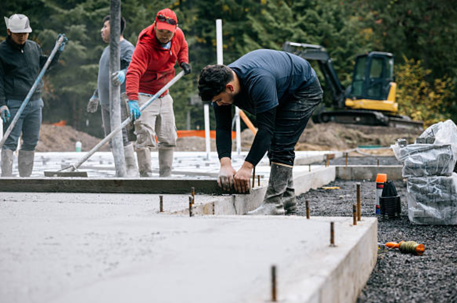
A new home warranty sets a reasonable expectation: cracks, shifting doors, and water pooling near the slab shouldn’t appear within the first years of ownership. Yet foundation problems surface in new Houston homes more often than many buyers expect, particularly where drainage, soil moisture, grading, or construction conditions weren’t handled carefully from the start.
At Fertitta & Givens, we handle home defect and construction defect matters for homeowners trying to understand what they’re seeing and what it means. Visible symptoms don’t, by themselves, establish cause or legal responsibility. A single crack may be cosmetic. But a combination of recurring cracks, sticking doors, uneven floors, and drainage issues can justify a much closer look.
Why New Houston Homes Can Develop Foundation Warning Signs
A home’s newness doesn’t protect it from soil and water conditions that affect its foundation. Most homes in the Houston area use a slab on grade foundation. A concrete slab poured directly on prepared ground serves as the home’s structural base. How that slab performs over time depends in part on how the site manages water and how the soil beneath it responds to moisture changes.
Houston’s expansive clay soil swells as it absorbs moisture and contracts as it dries. Those repeated cycles can contribute to foundation movement. Grading and drainage (how a lot is sloped and directs water away from the house) can matter as much as the concrete itself. Houston residential code requires finished grade at the foundation to provide positive drainage away from the house. Water that stands beside a foundation, flows toward the home, or saturates one area of the lot may point to a site-wide problem, not just a surface condition.
Some minor settling is normal as construction materials adjust and a home is occupied. The concern grows when changes are progressive, uneven, or return after repairs. Foundation problems in new homes shouldn’t be dismissed just because the house was recently built.
Foundation Warning Signs Worth Watching
No single symptom proves a foundation defect. Location, timing, direction, and progression all matter. Whether several changes appear together also matters. Photos taken over time can show whether a condition is stable or continuing to develop.
Interior Cracks & Finish Separation
Drywall and ceiling cracks deserve attention when they reappear after patching, spread across several rooms, or form at door and window corners. Watch for trim separating from walls, gaps opening between cabinets and walls, or baseboards pulling away from flooring. These conditions have multiple possible causes, but their pattern can be meaningful.
Exterior Cracks & Slab Conditions
Stair-step masonry cracks follow the mortar joints between bricks in a stepped pattern. Other exterior signs include separation around trim, gaps where exterior finishes meet, cracks in a garage floor, and visible cracks in the slab itself. A technical review can distinguish surface wear from conditions associated with uneven movement.
Doors, Windows & Floors
Sticking doors and windows can result from ordinary hardware issues or humidity. They warrant more attention when doors become misaligned in several parts of the home, windows no longer open as they once did, or the changes appear alongside floor sloping and new wall cracks. These combinations often tell a clearer story than any one observation in isolation.
When a Pattern Deserves Further Evaluation
Progression is often more informative than a single measurement. A repaired crack that returns, a door that becomes harder to close over several months, or a gap that widens steadily may be more significant than an unchanged crack found during one inspection. Changes after long dry spells or heavy rainfall can also provide useful context.
Differential settlement refers to uneven movement beneath different parts of a structure that places different stresses on walls, floors, doors, and exterior finishes. Determining whether it’s occurring requires looking at the home as a whole, not drawing a conclusion from one crack or one floor area.
Look beyond the walls as well. Standing water near the home, downspouts discharging close to the slab, soil pulling away from the foundation during dry weather, and low areas around the perimeter can all point to drainage or grading conditions worth documenting.
Patterns that merit attention:
- Recurring Repairs: Cracks or separations return after caulking, patching, or repainting.
- Multiple Locations: Symptoms appear in more than one room or on both interior and exterior surfaces.
- Operational Changes: Doors, windows, cabinets, or gates begin sticking or no longer align properly.
- Water-Related Changes: Conditions worsen after rainfall, dry weather, or repeated pooling near the house.
What to Document Before Making Repairs
Before authorizing substantial repairs or covering visible conditions, preserve a clear record. Once repairs alter the original evidence, it’s much harder to evaluate what was there before. Construction defect documentation (organized records, images, reports, and communications) can show what happened, when it happened, and how the builder responded.
Start with visual records:
- Photograph Each Condition: Take close images and wider shots that show the crack, gap, floor area, or drainage issue in context.
- Record Short Videos: Capture sticking doors, uneven transitions, water flow, or pooling after rain.
- Date Every Entry: Use a symptom log to note when a condition first appeared and whether it changed.
- Preserve Repair Evidence: Save invoices, proposals, work orders, and photos taken before and after any work.
Gather the purchase contract, addenda, plans or specifications, inspection materials, builder warranty documents, repair estimates, engineering reports, and correspondence with the builder or subcontractors. Keep emails, text messages, portal submissions, and written responses together. If someone inspects the property, write down the date, the inspector’s name, observations made, and any proposed next step.
Don’t assume a repair recommendation answers every question about cause or responsibility. It may address a symptom while leaving important factual and contractual issues unresolved.
How a Construction Defect Review Usually Begins
A construction defect review compares observed conditions against the documents and evidence surrounding the home: contracts, warranty language, inspection findings, repair history, photographs, communications, and information about likely cause. Legal responsibility depends on the facts, applicable law, contract terms, warranty provisions, and the evidence available in the particular case.
Technical input is often needed to assess foundation movement, drainage, grading, soil preparation, materials, or construction methods. An engineer or other technical professional can evaluate conditions that aren’t apparent from photographs alone. Their findings can help clarify whether the issue is connected to the foundation, the site, another building component, or more than one factor.
At Fertitta & Givens, we review contracts, inspections, reports, repair records, and other available evidence as part of our multifaceted case approach. We also give homeowners a candid assessment of favorable facts and potential challenges, because early symptoms can be significant without automatically establishing a claim.
Document Changes Before They Disappear
Prompt documentation preserves details that patching, repainting, drainage work, or structural repairs can obscure. It also gives you a useful timeline: what changed, where it changed, whether it returned, and what happened after the builder was notified. That record has value even if a later evaluation shows the condition has a cause other than a construction defect.
If you’re seeing foundation problems in a new Houston home, preserve your records before authorizing major work and consider the full pattern rather than any one symptom alone.
Houston-area homeowners who want to discuss a possible home or construction defect case can contact Fertitta & Givens for a free case evaluation at (346) 258-5803.